
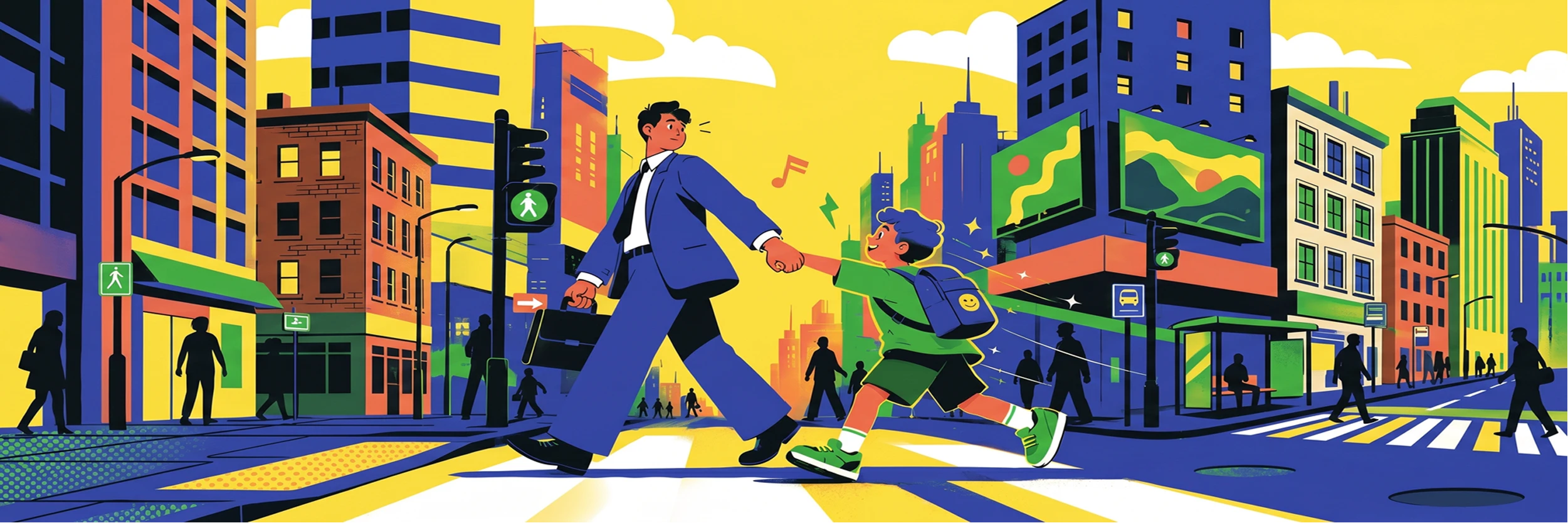
We only really grow up when we learn to act like a child again
Sometimes, the clearest view of who we are is the view of who we were in childhood.
By Gill Cross
My son came home from school the other day with a challenge that sounded suspiciously like a punishment for parents: build a boat, using everyday household items.
No motors. No cheating. No buying anything fancy. The kids had to float their boats in the school pool. The boat that travelled the furthest won.
So there I was, an allegedly grown-up adult, standing in my kitchen, holding a wooden spoon as if it were a NASA instrument.
I was staring at an empty ice cream tub and thinking, “This could work.”
Then something strange happened. I didn’t just help my child with a school project. I time-travelled.
I was four years old again, back near the river where I grew up, turning whatever I could find into “yachts”. Ice cream tubs, polystyrene scraps, plastic lids, anything that floated.
We weren’t trying to be productive. We weren’t building “transferable skills”. We were doing something far more radical.
We were playing.
Adulthood doesn’t make us older. It makes us more self-conscious.
As adults, we learn a set of rules so subtle we don’t even notice them becoming law.
Don’t look foolish. Don’t waste time. Don’t try something you might be bad at. Don’t be seen starting from scratch. Don’t make a mess.
Before we know it, we stop learning, not because we’re old, but because we’ve become too serious.
Our instinct is to tighten control, to become more efficient, more “realistic”. But there’s a problem. That’s not resilience. That’s fear.
What we actually need is curiosity, humour and play. We need what children have in industrial quantities.
The ability to try, fail, laugh and try again without making it a full identity crisis.
We often treat the “inner child” as a fluffy concept reserved for wellness retreats.
But psychologically, your inner child is the part of you that still knows how to start as a beginner, how to experiment, improvise, recover from embarrassment, imagine alternatives and find joy without needing a reason.
These are not childish traits; they are change traits.
Most of us struggle with change, not because we can’t learn, but because learning requires something terrifying – being bad at something in public. Adults hate that.
We’d rather stay competent and slightly bored than risk being a beginner. That’s how you end up with a population of capable people who secretly feel stuck.
Humour is one way of escaping this feeling. Humour interrupts the stress response, softens defensiveness and creates a connection.
A society that can’t laugh becomes brittle. A person who can’t laugh becomes brittle too.
If you’re feeling brave, try this as a week-long experiment. Not to become a new person, but to become a slightly freer version of the one you already are.
Do something you’re not good at, on purpose. Bonus points if you don’t apologise for it. Take a 10-minute walk like you’re a tourist in your own life.
Make something that doesn’t matter. Bake, build, draw, plant, fix something badly. Do it for joy, not achievement.
Reclaim a childhood pleasure. Read something fun, watch something silly, listen to a song you loved at 14.
Play with someone. Send a meme. Start an in-joke. Ask a playful question. Build your own version of a kitchen boat – create something from what you already have.
Write down five things you still want, small or big, that your adult brain has labelled “unnecessary”. Pick one. Begin.
Watching those kids launch their little boats in the pool, I realised that the point wasn’t the winning.
The point was that they were fully alive, experimenting, cheering, laughing, adjusting, trying again.
In the process, so was I. Maybe that’s the real gift children give us. The reminder that we are never too old to learn, and that we’re never too old to begin again.
Because choosing to have serious fun might be one of the most grown-up forms of courage we have left.